Originally reported November 11, 2026, at 18:26 (UTC+8). As Ethereum’s mainnet became cheaper to use, several projects reconsidered whether running or relying on a separate Layer 2 (L2) still served their needs. The examples do not amount to an ecosystem-wide departure from L2s. They show projects weighing execution costs against liquidity, security, integration and the work of operating another network.
Projects reassess where to operate
ENS Labs planned a dedicated ZK rollup, Namechain, for ENSv2 in 2024. In February 2026, ENS co-founder Nick Johnson said development of Namechain would stop and ENSv2 would deploy on Ethereum L1 instead. His stated reason was that mainnet had scaled faster than expected. According to ENS Labs, the average gas cost of an ENS registration had fallen about 99% over the preceding year, from nearly $5 to less than $0.05. The project also faced the costs and complexity of operating an L2, including cross-chain resolution, bridging, audits and maintenance.
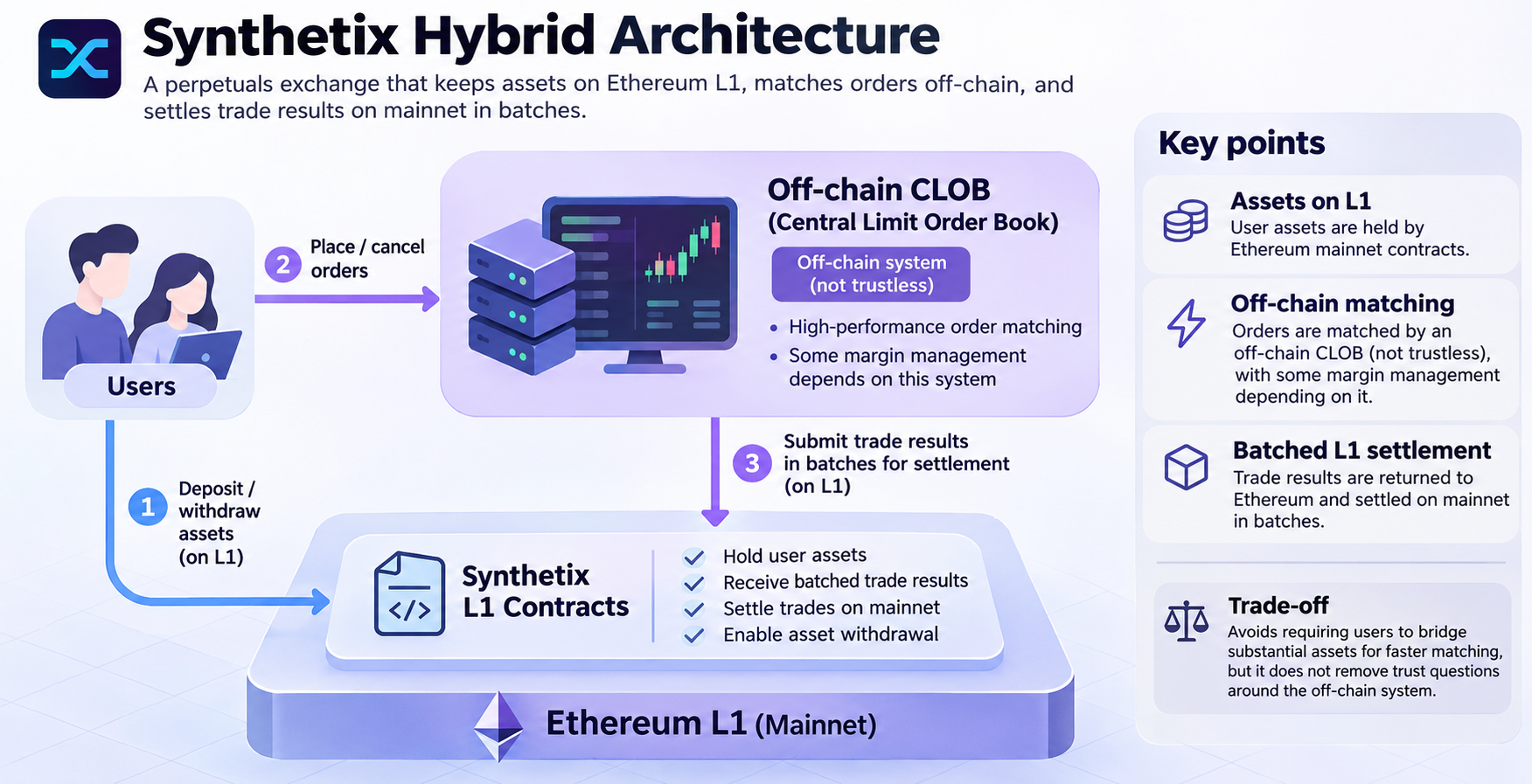
Synthetix made a different architectural choice. After arguing in June 2025 that L2 infrastructure instability and fragmented liquidity had created problems for applications, it launched its next-generation perpetuals exchange on Ethereum mainnet that December. The source describes a hybrid design: L1 contracts hold user assets, an off-chain central limit order book matches orders, and trade results are settled on mainnet in batches. That avoids requiring users to bridge substantial assets for faster matching, but it does not remove trust questions around the off-chain system; some margin management still depends on it.
Other moves reported during 2026 had distinct motivations:
- Trueo announced in September that it would move its primary deployment from Base to Ethereum L1, citing integration, network effects and neutrality for its prediction-market and outcome-oracle plans.
- ShapeShift moved its rFOX staking program from Arbitrum to mainnet on October 1, noting that most FOX tokens were already held there.
- Superseed stopped its L2 in August and planned to move core products to mainnet, replacing reliance on chain gas revenue for loan repayments with application-level yield strategies.
- Nillion launched Blacklight L1 in October, moving node operations from its L2 to Ethereum mainnet and planning to phase out the earlier network.
The article also reported operational pressure on two L2s. Blast said on October 2 that it would wind down because network maintenance costs exceeded L2 revenue and it saw no reliable path to sustainability. Abstract subsequently announced a plan to close its network on December 15. The source says Abstract had integrated more than 144 applications and attracted over 400,000 users, but faced insufficient liquidity, a limited DeFi ecosystem and a lack of institutional participation. Its planned closure was not yet a completed event at the November 11 reporting date.
What changes—and what remains unresolved
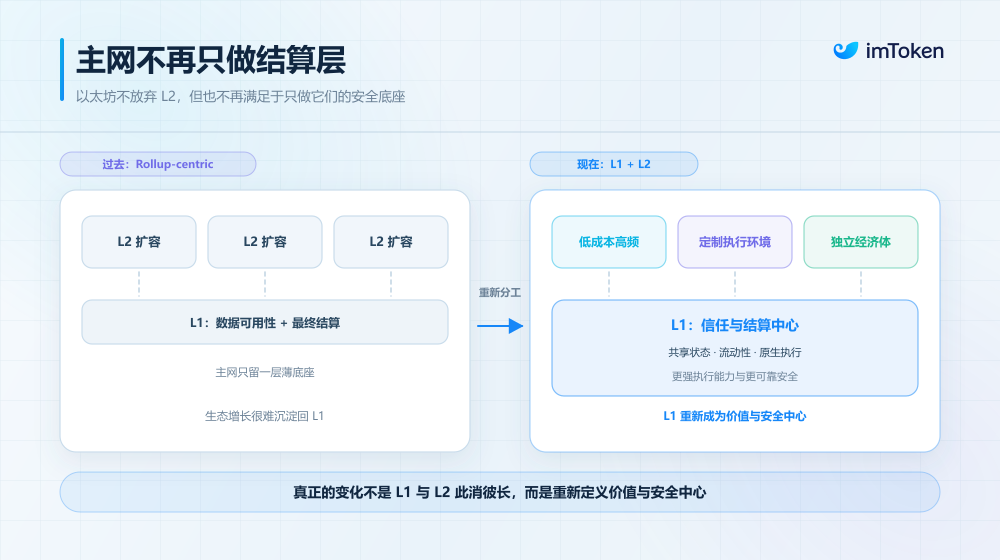
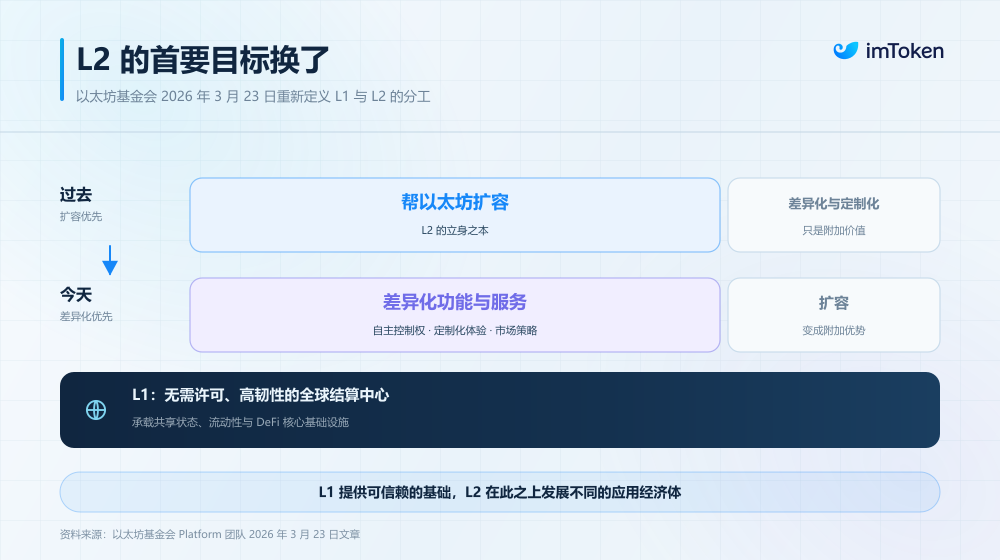
The original rollup-centered division of labor placed security, data availability and final settlement on L1, with L2s providing cheaper execution. The article argues that improving L1 capacity and slower-than-expected L2 decentralization are prompting a reassessment of that division. Citing ETHBEAT data as of November 2026, it says the tracker listed dozens of L2s, only a single-digit number of which had reached Stage 2; it identified Base, Arbitrum One and OP Mainnet as Stage 1. These stages describe L2 maturity, not Ethereum protocol upgrades.
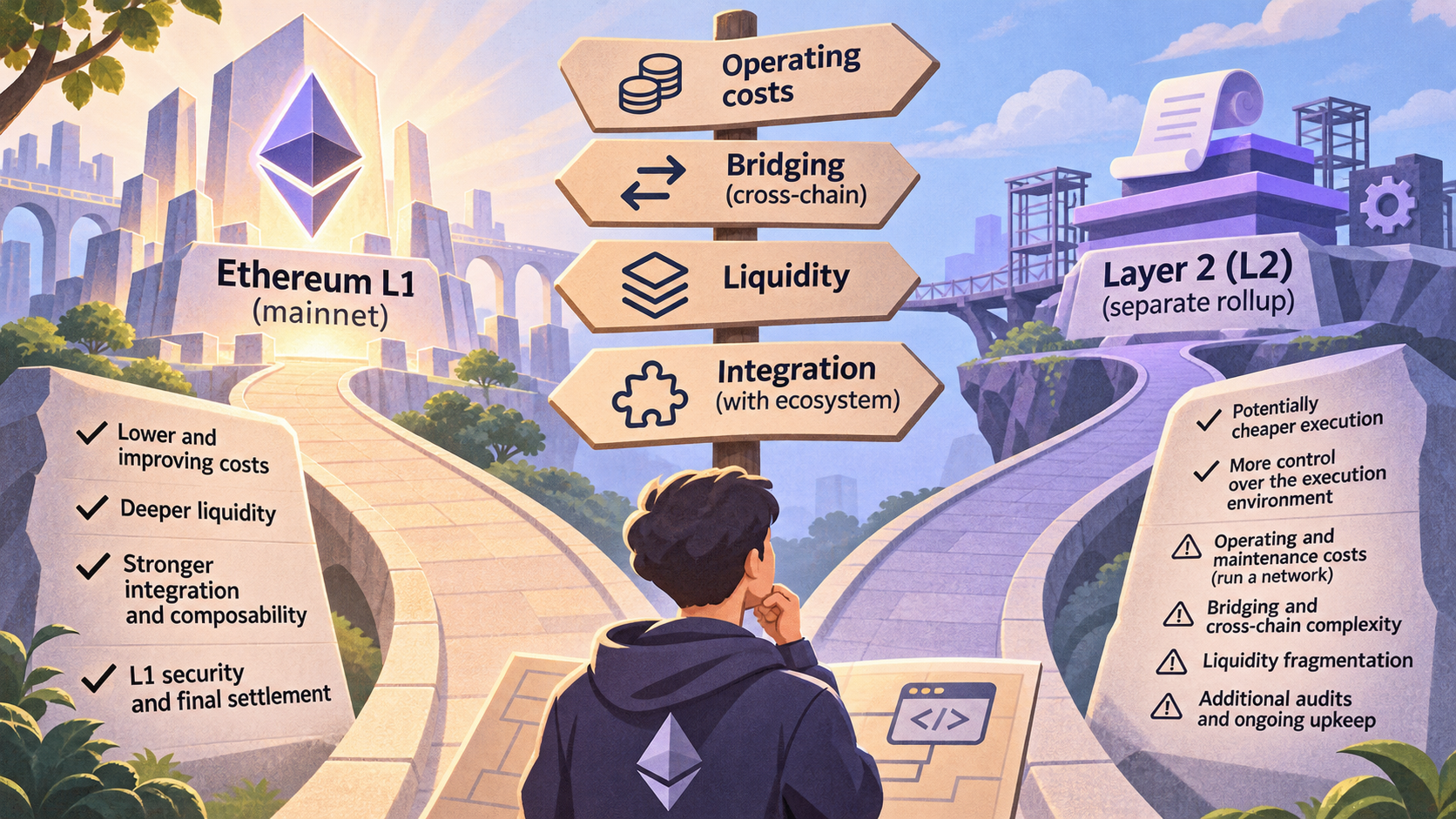
One possible design response is to keep assets and critical state on L1 while performing frequent or complex computation elsewhere, as in the Synthetix example. Native Rollup research points to another potential approach: Ethereum-native ZK-EVM verification of rollup execution could reduce reliance on external security committees. The Ethereum Economic Zone is likewise described as an effort toward closer synchronous interaction between rollups and mainnet. The source presents these as research or developing approaches, not activated network features. It also acknowledges continuing uses for L2s, including high-frequency trading, gaming, privacy-oriented computation and applications seeking control over their execution environment.
The separate question of ETH value
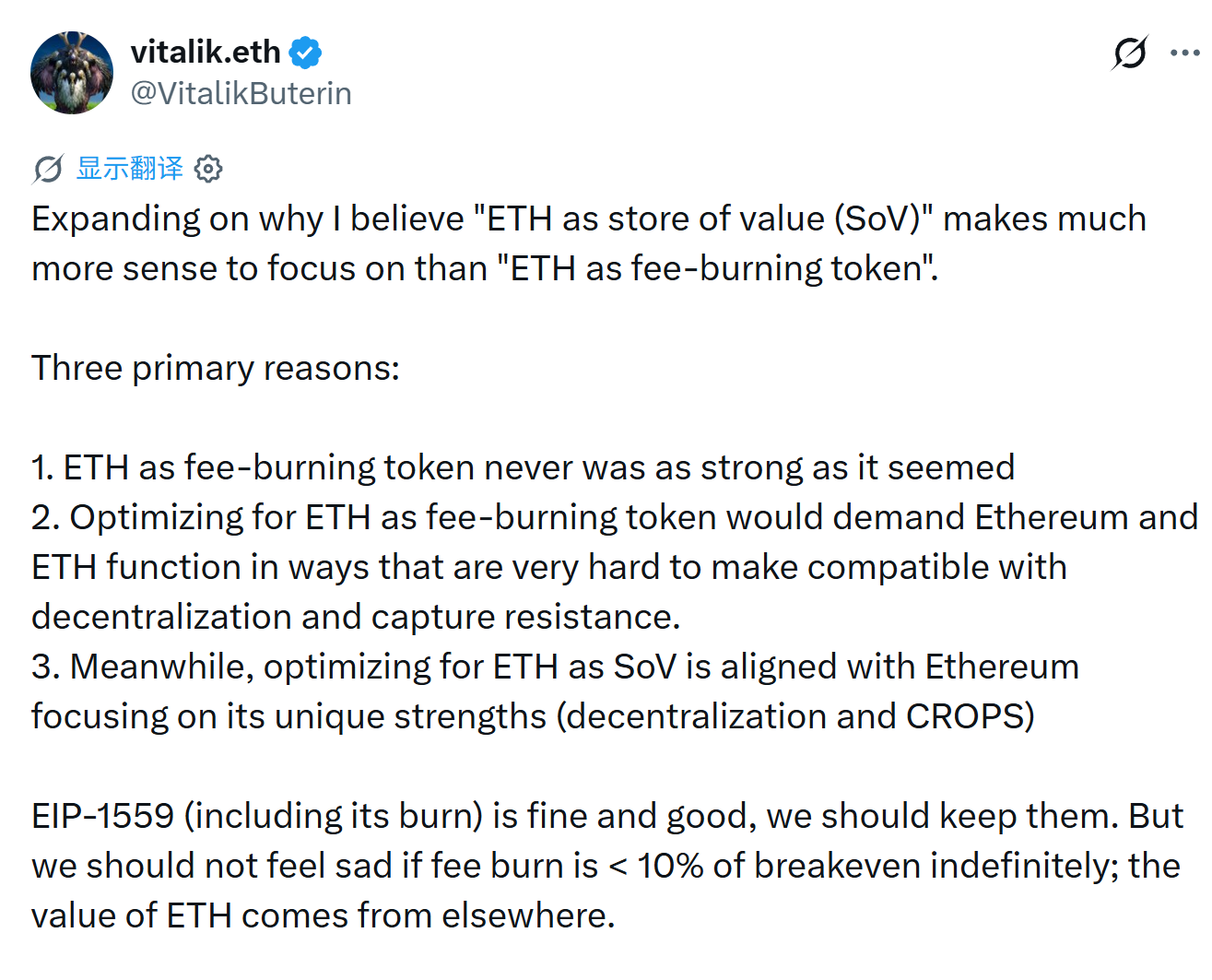
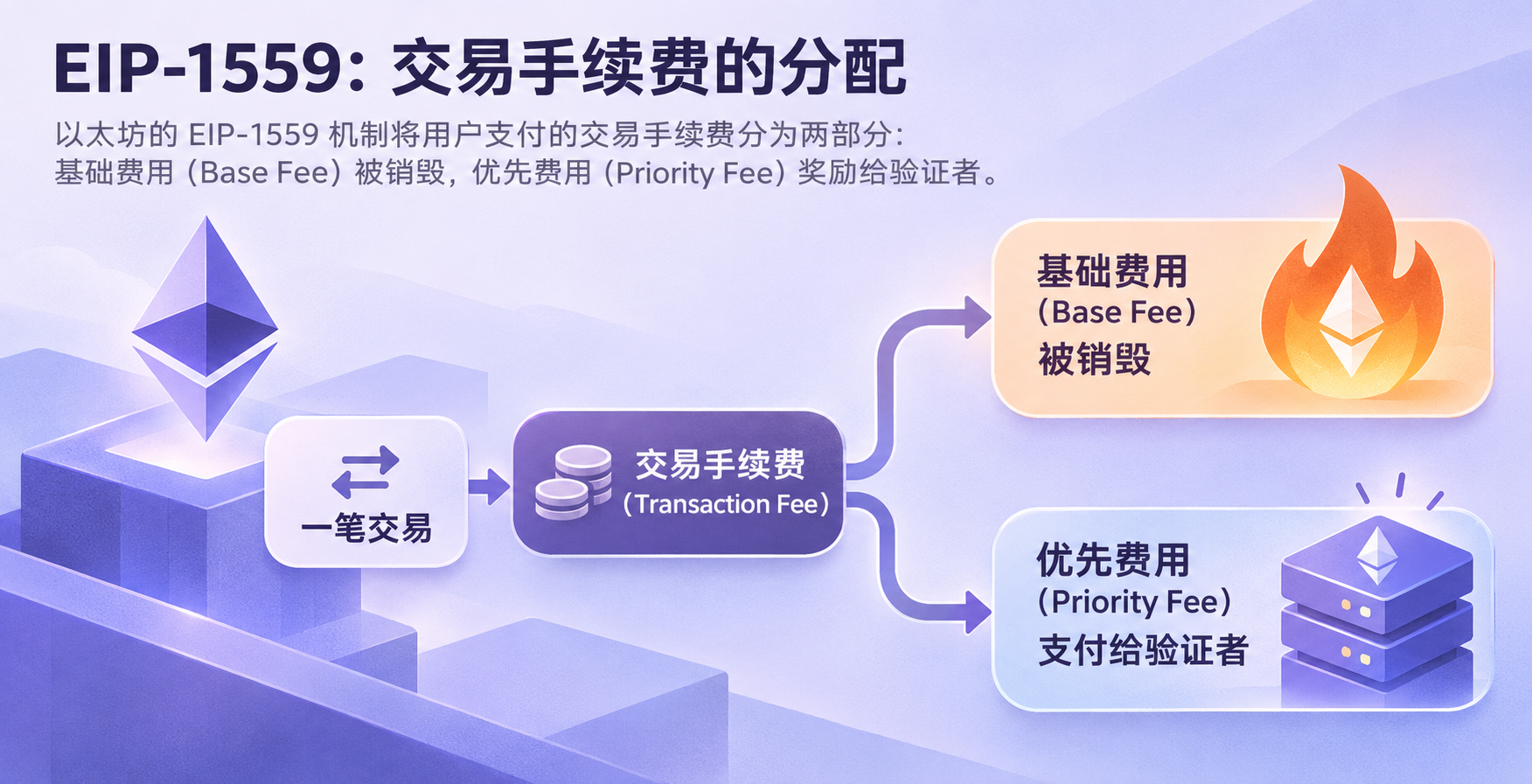
The article links this architectural debate to ETH’s value proposition, while distinguishing its argument from a protocol change. Under EIP-1559, transaction base fees are burned and priority fees go to validators. Cheaper L2 data posting after upgrades including Dencun and Fusaka, alongside a higher mainnet gas limit, can reduce fees per transaction; greater activity therefore does not necessarily mean proportionally greater ETH burning.
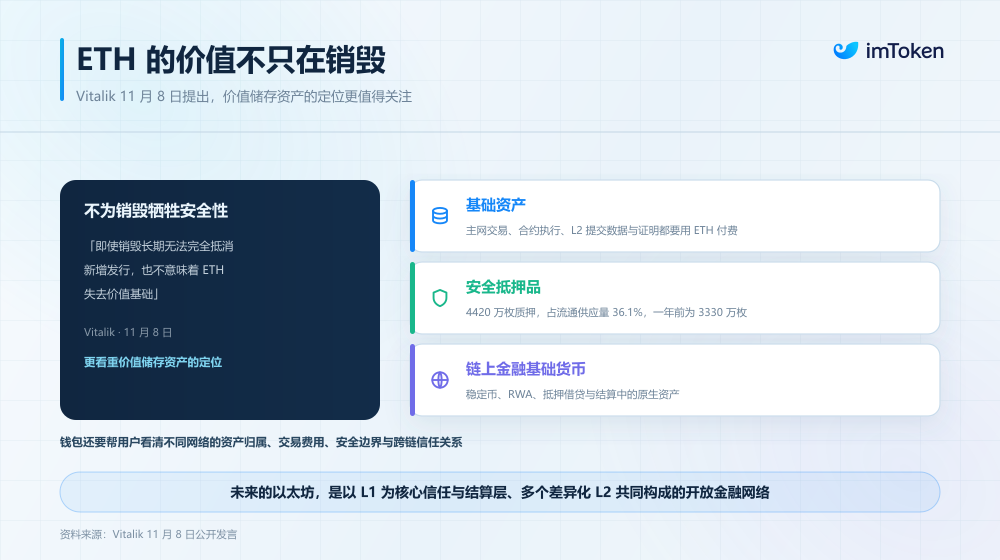
The article attributes to Vitalik Buterin the view that ETH’s store-of-value role deserves more long-term attention than fee burning alone. It says he supports retaining EIP-1559 even if burning were to offset less than 10% of what he described as breakeven issuance. As a caution against extrapolating past burns, the article cites approximately $180 million in fees burned in one day during Yuga Labs’ 2022 Otherdeed NFT mint. Buterin’s alternative emphasis, as presented here, is on Ethereum’s decentralization and the properties he calls CROPS: censorship and capture resistance, open source, privacy and security.
These are arguments about direction and value, not evidence that every project should return to L1 or that proposed interoperability work has shipped. The cases reported on November 11, 2026, instead illustrate a narrower decision: where should an application keep assets and critical state, and what does it gain—or take on—by operating elsewhere?
Source: odaily.news (originally published 2026-11-11 18:26 UTC+8)