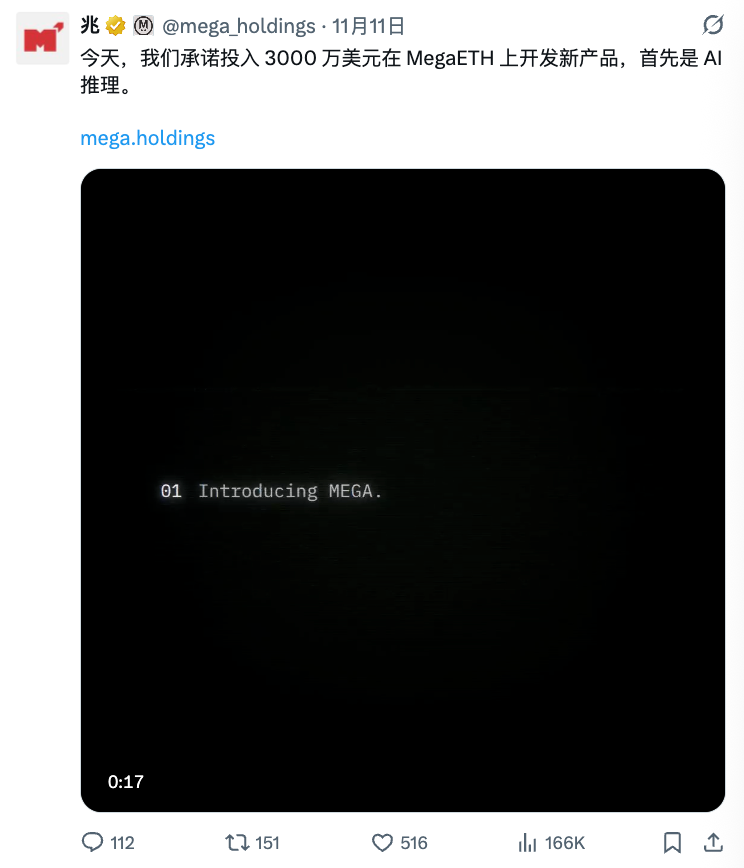
Ether.fi still offers the liquid restaking service it built around EigenLayer, but its product line now includes a Visa card and a native stablecoin. Swell made a sharper break: in April 2026, it announced it would close SwellChain to focus on a trading app. MegaETH took a third route, setting aside $30 million to develop applications for its own layer-2 network.
In a November 25, 2026 analysis of 13 crypto projects, blocmates argued that changing direction can be a reasonable response when a product fails to find a market. The cases differ in an important respect: some teams are putting existing infrastructure to a new use, while others have decided they no longer need to operate a chain at all.
What restaking teams kept
The liquid restaking protocols that blocmates followed in 2024 had substantial assets deposited in them as well as sizable treasuries. That gave the teams room to develop other products, but they made different choices about which assets to serve and where to operate.
- Ether.fi expanded into banking-style services without dropping restaking. Alongside its Visa card and stablecoin, it offers yield vaults, lending and borrowing, and trading.
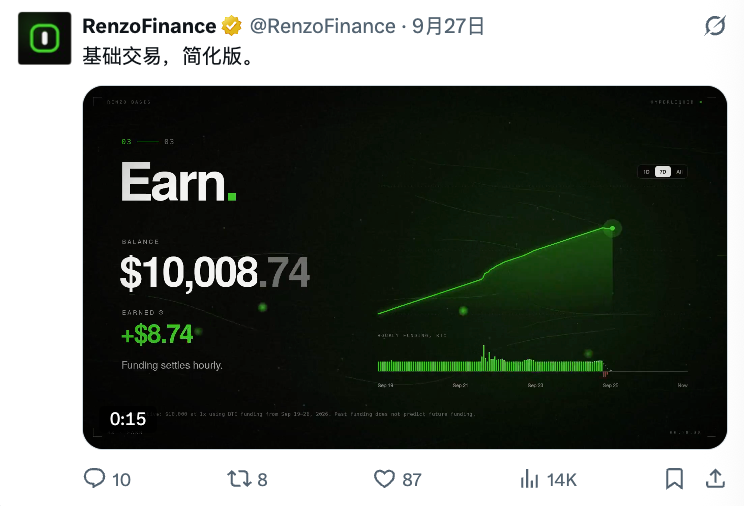
- Renzo Protocol rebranded as Renzo Finance to manage trading strategies through vaults and earn management and performance fees. On the day of the rebrand, it launched Renzo Basis on Hyperliquid. The vault pursues a basis strategy, seeking to earn the price difference between related instruments while limiting exposure to market direction. Renzo was also considering other chains and decentralized perpetual futures exchanges for additional vaults.
- Kelp shifted its focus to strategy vaults on Gains after a hack. It also plans to introduce KUSD, a stablecoin intended to support institutional payments and foreign exchange settlement.
- Bedrock shifted its emphasis from Ethereum to Bitcoin, which already accounted for most of the assets deposited in the protocol. Its yield vaults allocate BTC to decentralized finance, institutional strategies and trades designed to limit directional exposure.
- Puffer stayed with infrastructure. It is working on preconfirmations and based rollups: the aim is to give users an early indication that a transaction will be included while retaining final settlement on Ethereum. Puffer sees confirmations of about 50 milliseconds as a basis for serving AI agents that need to settle transactions.
- Swell chose to focus on Faro, a noncustodial AI trading app built on Hyperliquid, rather than continue operating SwellChain.
When an application matters more than the chain
MegaETH’s first in-house application, Purified Intelligence, was scheduled to launch in December 2026. It targets an existing market for AI inference, where services such as OpenRouter and Venice already operate. The problem MegaETH identifies is that a cheaper provider running an open-source model is not necessarily interchangeable with the model’s original lab: customers need to verify which model answered a request and know how their data was handled. MegaETH wants to standardize those assurances so customers can compare providers on price.
For Igloo, the decision went the other way. The parent of Abstract and Pudgy Penguins decided to close the Abstract chain and concentrate on the Pudgy Penguins brand, its NFTs and the PENGU token. Abstract had brought in Disney and Red Bull, and the team resisted calls to issue a separate ABSTRACT token. In blocmates’ assessment, those relationships did not establish a viable consumer chain.
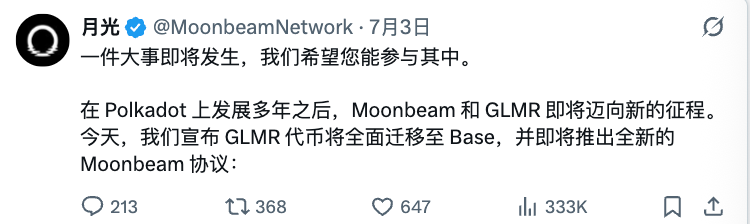
Moonbeam, formerly a flagship Ethereum-compatible parachain on Polkadot, announced in July that it would move its operations and GLMR token to Base. Its proposed network would let AI agents find one another, agree on terms and settle onchain. Each task would use escrow and be rated against proofs. Nillion, by contrast, narrowed the scope of its privacy technology: instead of building a general-purpose “Blind Computer” for processing encrypted data, it is focusing on a single function it calls Covenants, designed to keep intent hidden.
Which products still need a token?
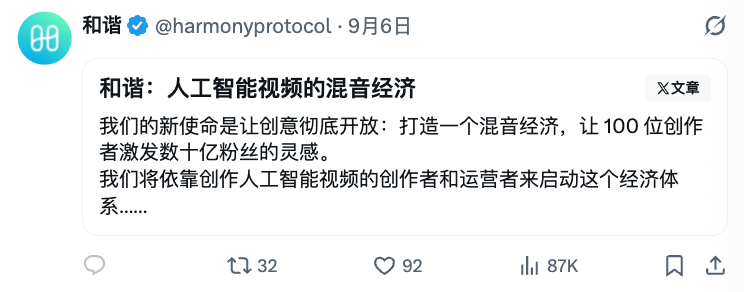
An August hack that resulted in approximately 3 trillion counterfeit ONE tokens prompted Harmony to roll back its chain. Faced with calls either to shut down or to reissue ONE on Ethereum, the team chose reissuance. Its new focus is AI video: users prompt and remix video stories, with token issuance subsidizing GPU costs.
Golem, which dates to the 2016 ICO era and, according to blocmates, still held hundreds of millions of dollars in its treasury, found another use for GLM. It unveiled Arkiv at Devcon earlier in November. Designed as a searchable, tamper-resistant Web3 database, Arkiv is intended to use GLM for transaction fees. Blocmates characterized it as an extension of Golem’s work rather than a departure.
Immutable took the opposite approach with Audience, its AI marketing platform for game publishers. After cutting nearly its entire internal games team in June, it opened Audience in August to studios whose games had not yet launched on Steam. The offering had no blockchain component. Blocmates also reported that IMX was 99% below its all-time high.
For blocmates, the test is whether people want the resulting product, not whether a team has preserved its original mandate. The author pointed to stablecoins, perpetual futures and tokenized stocks as products people were willing to use despite awkward interfaces. That is a benchmark for the teams changing course, not evidence that their new products have already found a market.